SNAP: Accelerated Prototyping
Mø conceived of and built an Experience Innovation studio from nothing into a global prototyping franchise. He then led the creation of 32 patentable prototypes across AR, VR, voice, gesture, IoT, UAV, and brain-computer interfaces. The method mattered as much as the output: a repeatable path from ambiguous brief to working device. From humble roots starting in an underutilized broom closet to a global network in NYC, SYD, and SIN.

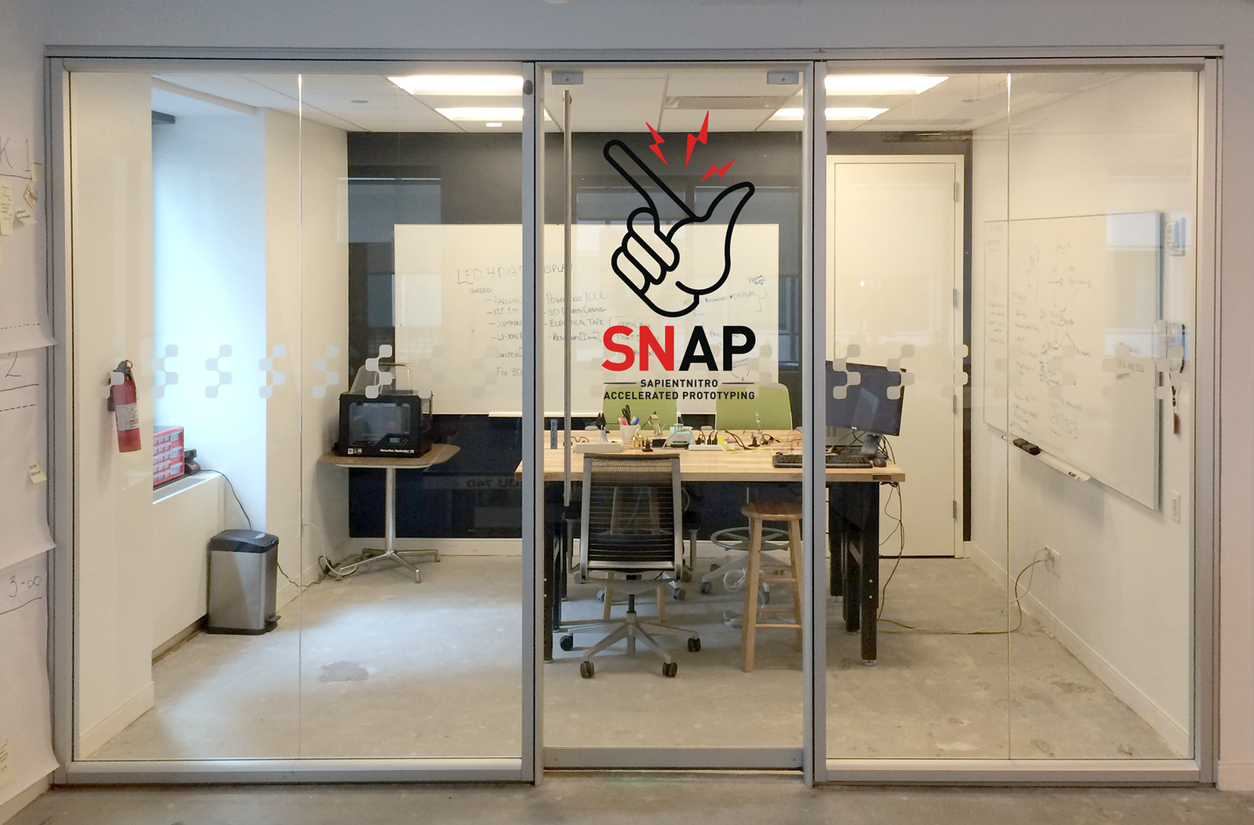
The program
A few artifacts from various decks that help explain what SNAP is and how it works.
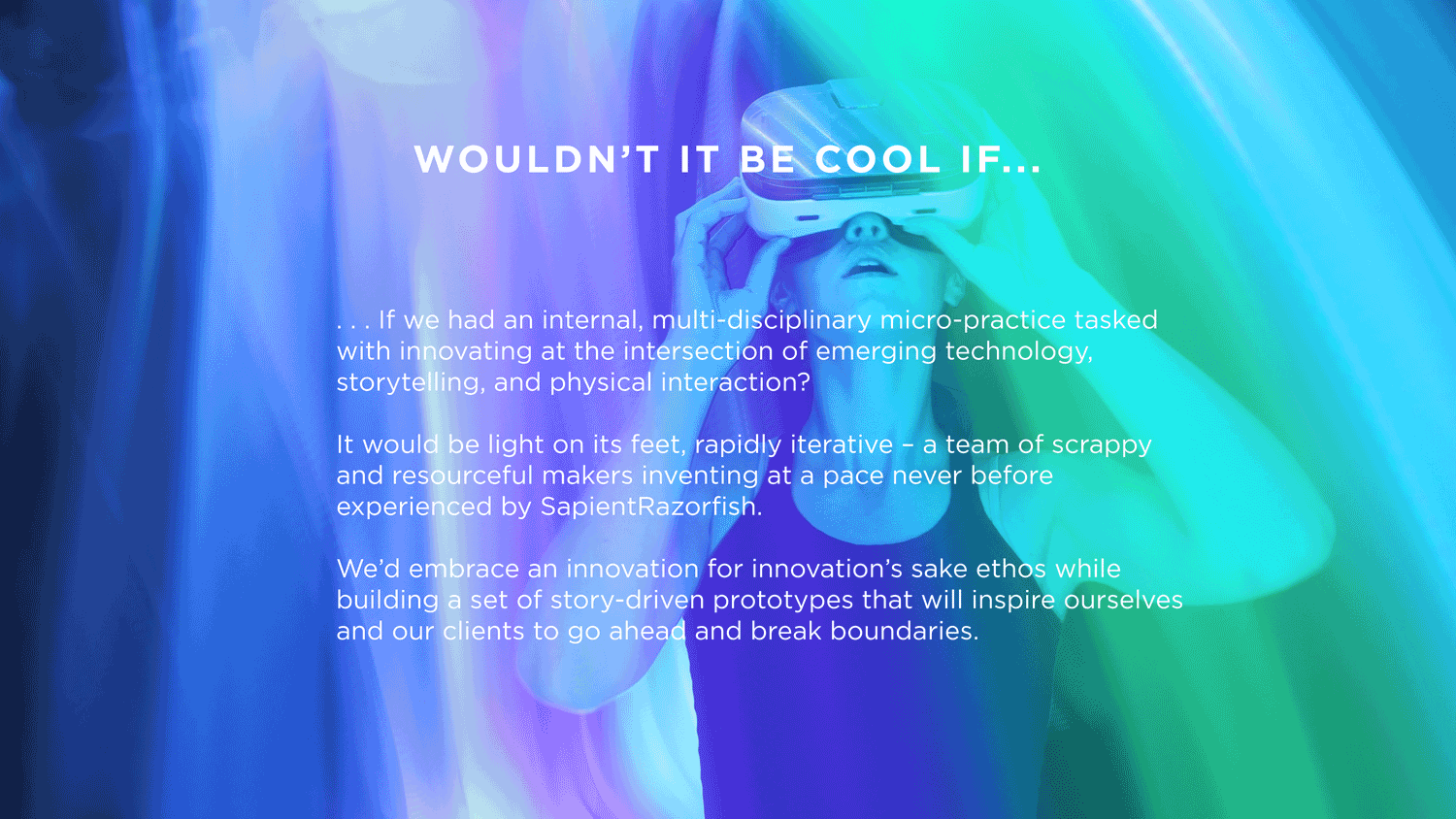
The origin
"Wouldn't it be cool if..."
That's how Mø pitched it to his Executive Creative Director
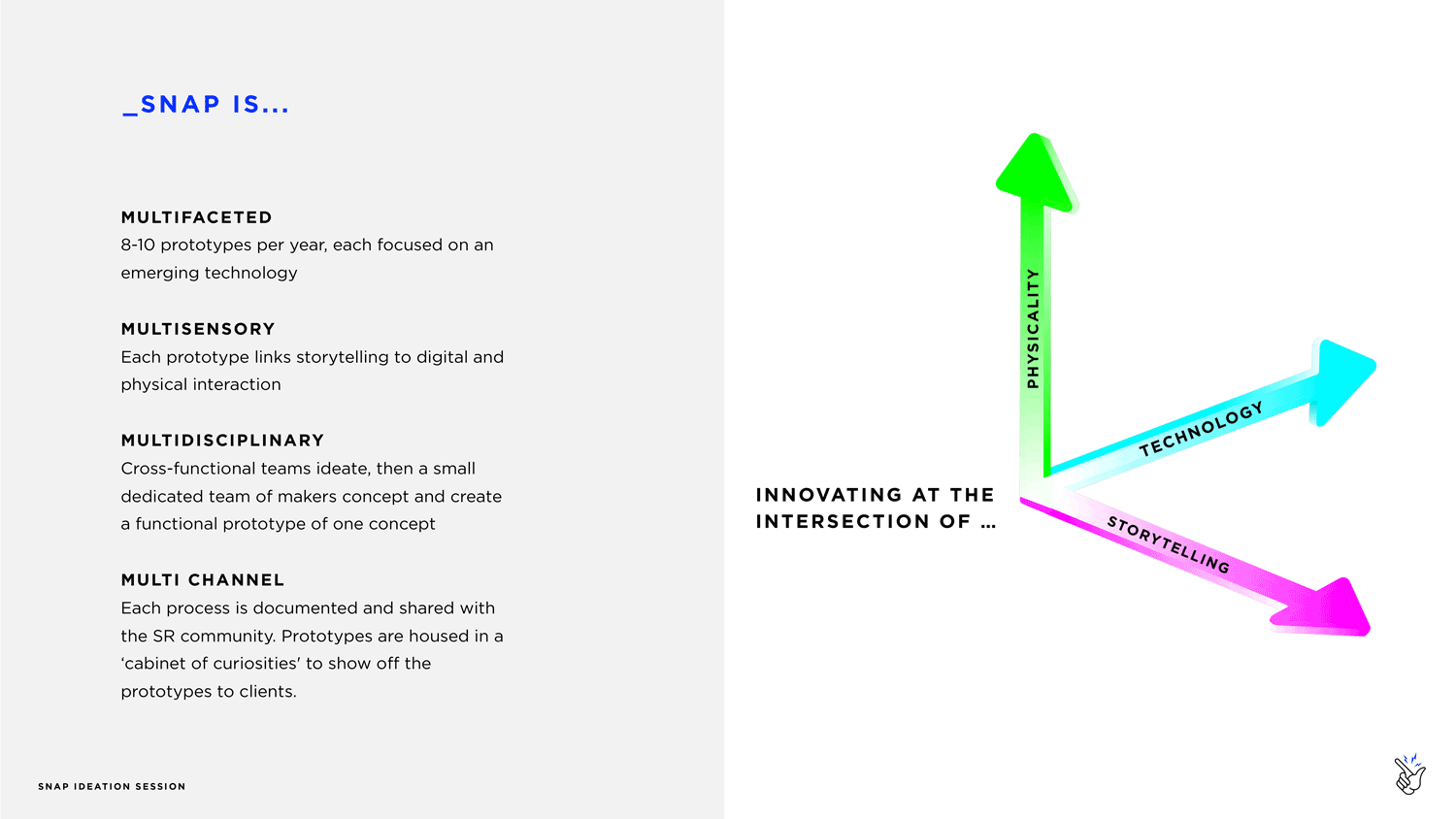
The multi-dimensionality
The program sits at the intersection of Technology, Physicality (real things), Storytelling.
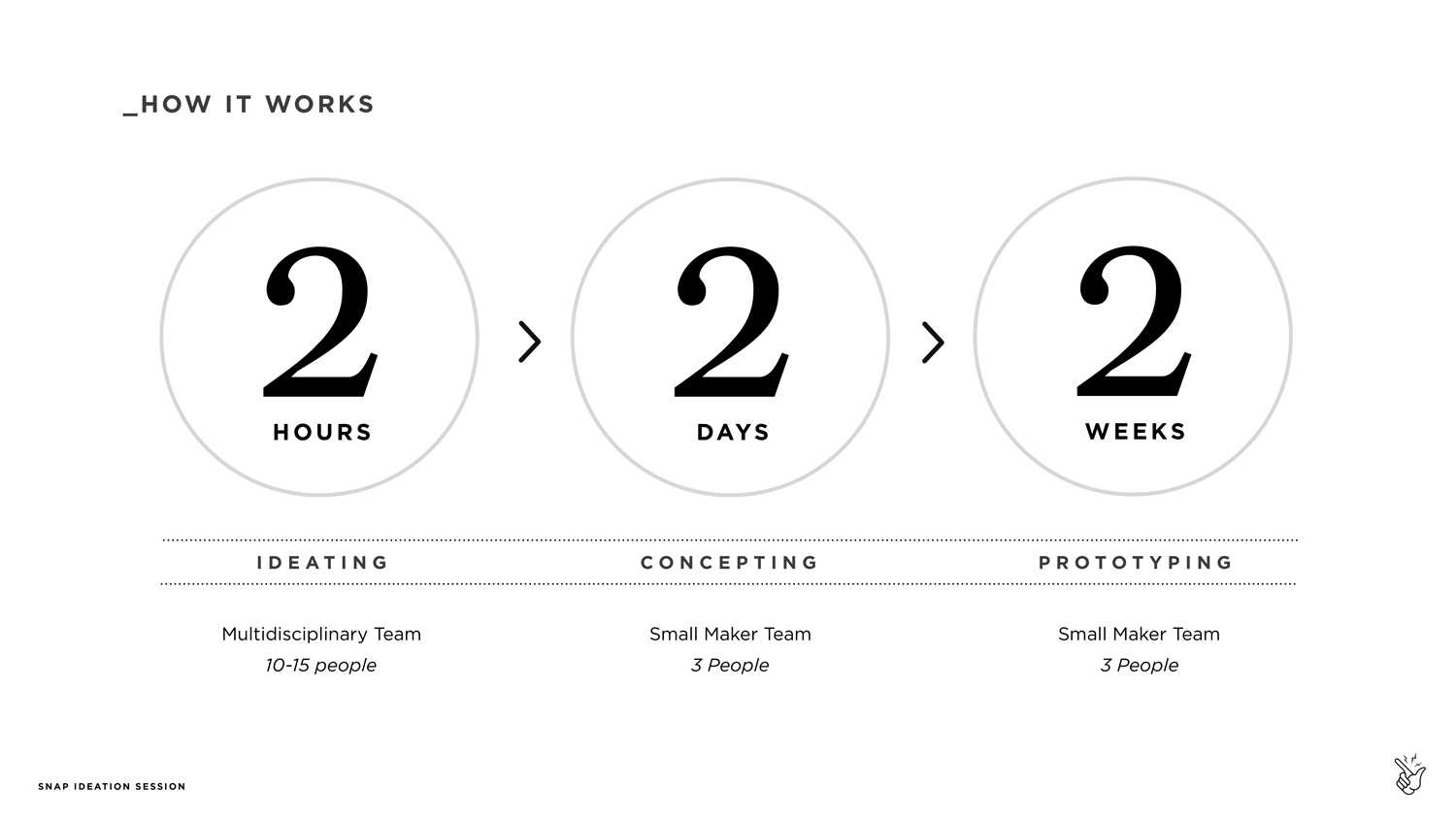
The process
Mø created this approach inspired by his 16 years with Nike Innovation. Rapid prototyping in three steps.
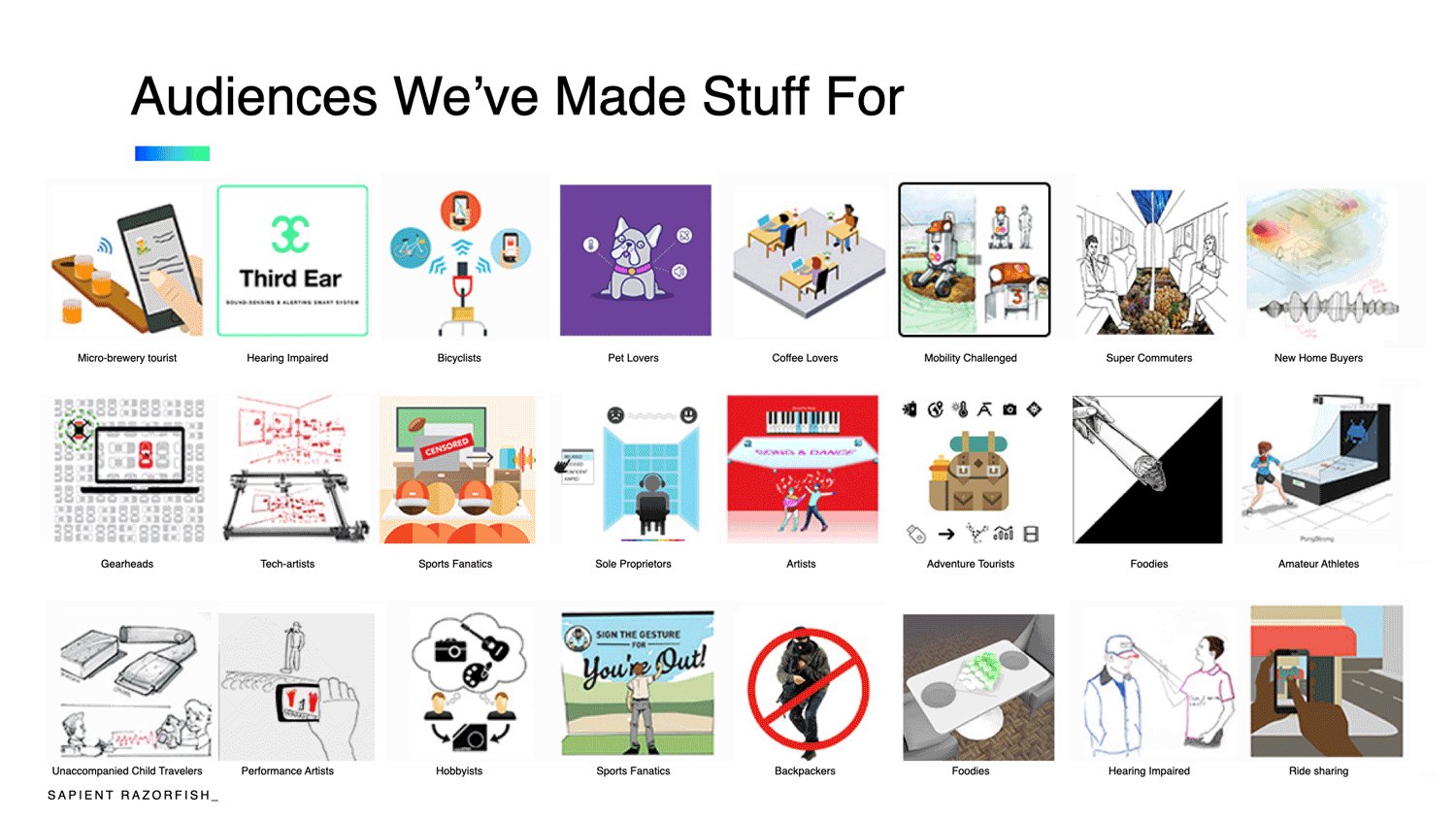
The audiences
One constraint that led to the incredible creative results was focusing on niche and underserved audiences.
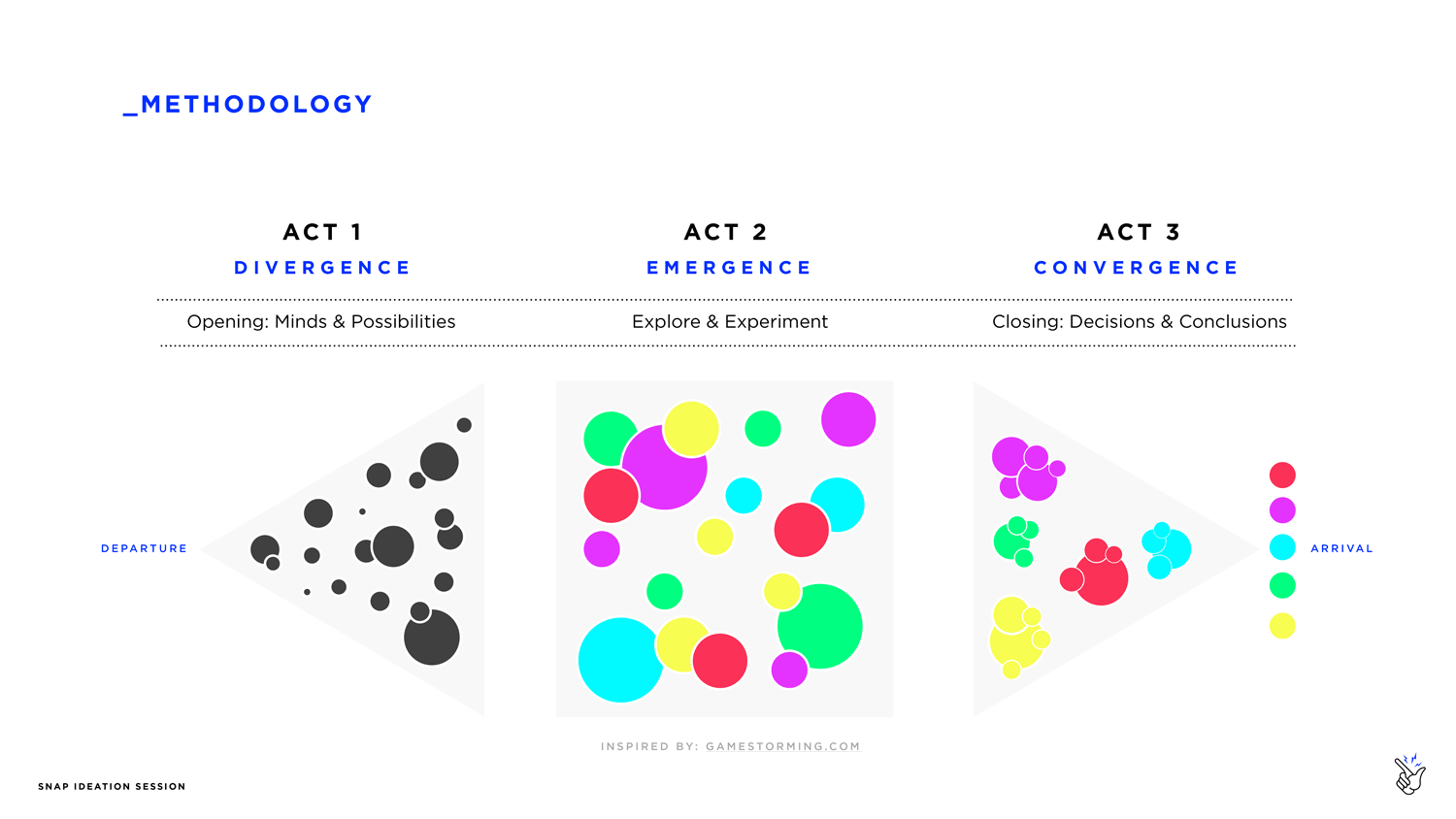
The method
The principle is simple: no-holes-barred creative ideation, thoughtful grouping of concepts, then laser-focused ideas.
The scaling
Here is a pitch deck Mø built and presented to other Sapient-Razorfish offices as the program scaled globally.
Greenlit: Projects selected for prototyping
After 2 hours of group ideation and 2 days of concepting, the team presented their ideas to a committee of judges from senior leadership. The delivery of three concepts was designed to force collaboration. With two concepts each maker tended to think of their idea as precious. Expecting four left not enough time to think thoroughly about the idea. Ideas were judged against Viability, Feasibility, and Desirability.

Binaural Beat Box
Greenlit from the Independent Business Owners + Biometrics session: an in-office experience altering mood through binaural sound and visuals.

FoulMouth
Greenlit from the Sports Fanatics + Gamification session: "The digital swear jar" — donates to charity for every curse a fan lets slip.

Pong Strong
Greenlit from the Amateur Athletes + Projection Mapping session: a projection-mapped arcade game that trains ping pong skills.
Completed projects
Just a small sampling of the 32 completed projects. AutoMagic Lock was a praised for it simplicity and urban utility; Blink was piloted at the Ronald McDonald House in Chicago to help children undergoing extensive hospital stays remain emotionally connected to their parents; ThirdEar brought people to tears with how thoughtfully it served people living with hearing impairments.

AutoMagic Lock
"Leave your bike lock at home." A hands-free Bluetooth security system, Bronze at the 2016 Hatch Awards and a MITX finalist.

Blink
"A language of love through light." With Ronald McDonald House, a Cannes-shortlisted, iDSA Silver and Core77 award-winning connection device for separated families.
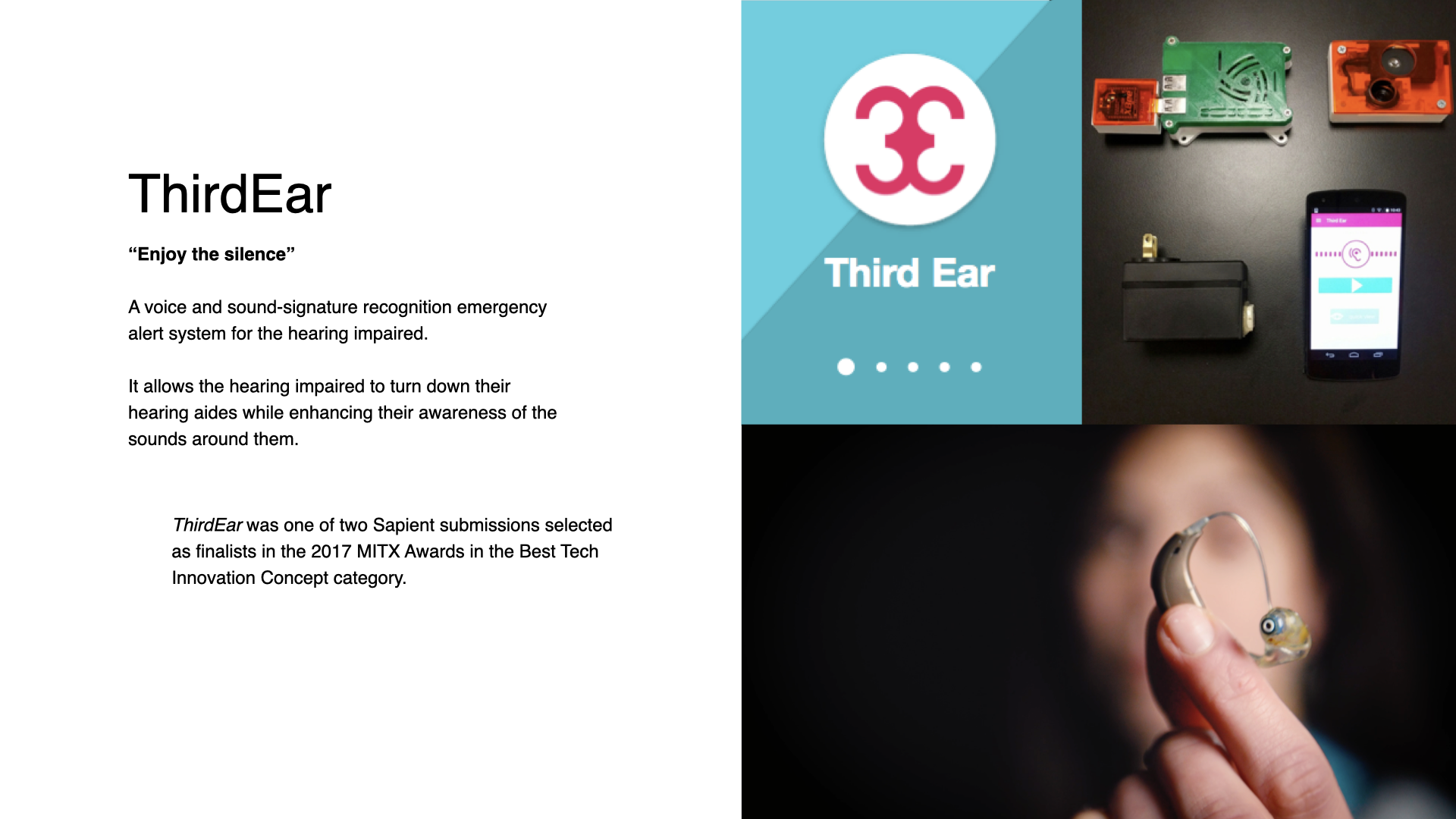
ThirdEar
"Enjoy the silence." A voice and sound-signature emergency alert system for the hearing impaired, a 2017 MITX finalist.
Eighteen prototypes, on film
Nearly every build ended in a demo film allowing the story of working devices to travel to clients, to other offices, and to awards juries. The library holds the sizzle reel plus eighteen individual prototypes across AR, VR, voice, gesture, IoT, UAV, and brain-computer interfaces.
See the prototype library →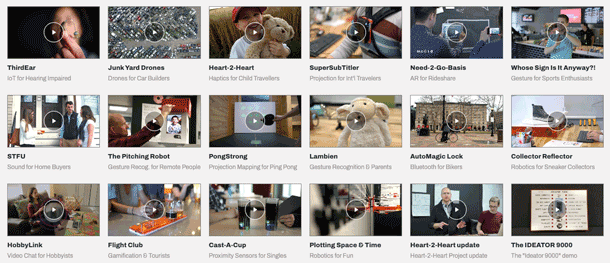
Get in touch
Let Mø know what you're working on and what you need from design leadership or product innovation.

